

Herstory : India Juliana: the native woman that fought back!

I write this on the day of the US midterm election results, in what has been an historic win for the democrats. Among many amazing things was the election of the first ever native american indigenous woman as Governor of a US state (New Mexico). And it immediately got me thinking about another powerful indigenous woman - someone I’ve wanted to write about for a long time - “The India Juliana” of Paraguay. So, in the spirit of the matriarchy rising fervour in the air right now, here is this month’s Herstory!
Rape, Pillage, Repeat…
When the Spanish colonialists arrived in Paraguay in the 16th Century, they were disappointed to discover that it did not contain the hordes of gold and minerals that they had hoped to steal and pillage. The marauding Spanish were also, unsurprisingly, met by resistance from the indigenous Guarani people. So if they couldnt have the gold, the Spanish wanted a substitute, something that was an inherently better long term investment - fertile women.
Pacts were made with the tribe leaders and women were the bargaining tools. This was done under a Guarani custom of kinship alliances - friendly, polygamous marriages would be made in exchange for reciprocal labour services. This had been done by Indian tribes for centuries. But the colonialists of course, didnt want mutual ‘kinship’ - their goal was domination. Eventually the good-faith alliances went sour, and the indigenous women given to Spanish conquistadores were forcibly enslaved.
The Indian women were useful to the Spanish for two reasons: 1) They could produce the ‘mestizos’ that were important for the establishment of ruling colonies. 2) They had the cultivation and plant knowledge of the exotic and (deadly) local habitat that the Spanish so badly needed.
And so began a reign of terror against the indigenous women of Paraguay: forced labour, child bearing and sexual slavery. In the 1540’s, hundreds of women were forcibly removed from their communities; bought, sold and trafficked between Argentina and Paraguay.

A Rebel Rises…
It was out of these barbaric ‘rancheadas’ as they became known, that India Juliana emerged. Her name means ‘The Indian Juliana’ and is the Christianised name given to her. Her indigenous name is sadly lost. She was a Guarani native woman sold to a Spanish settler by the name of Nuño de Cabrera.
Somewhere between 1539 and 1542 she poisoned and killed her husband with ‘herbs’. She was arrested by the Governor and taken prisoner, only to be released at the request of her dead husband’s cousin, who held some sway with the Governor it seems. She was said to have not only confessed to the crime she was accused of, but also bragged about it to other indigenous women:
“…and to all the other Indian women who served the Christians she told that only she was the brave one who had killed her husband…”
Account of the Shipwrecks and Commentaries of Alvar Núñez Cabeza de Vaca 1555.
When a new Governor arrived in Asunción, he ordered her re-arrest and execution by dismemberment (!) to send a message to other enslaved natives who might be emboldedend by her actions!
A legendary rebel and tragic martyr. But as all legendary and iconic rebels are enshrined partly in folk legend, some of the details of Juliana’s story are blurry.
The first mention of Juliana’s case is in 1545 by the then Governor (Nuñez Cabeza de Vaca) of Paraguay’s scribe. In 1555 Cabeza de Vaca, (having been shamed and disgraced by the Spanish for being ‘too soft’ on the indigenous people in Paraguay because he disapproved of their being exploited !) wrote a report of his disciplining of Juiiana, stating that he:
“…did justice to it, because in addition to deserving it, [I] agreed to remove the audacity that [other women] did not dare to such cases.”
Cabeza de Vaca’s account also suggested that Juliana might have been having an affair with her husbands cousin, and maybe even the former Governor who released her - in a clear attempt to restore his own reputation to that of a ‘civilising influence’, and to slander his predecessor.
Cabeza de Vaca is complicated, because on the one hand, he appears to have had a comparatively sympathetic view of the plight of indigenous people and even tried to stop the rancheadas altogether. But on the other hand, he saw it his duty to bring the rebel Juliana to justice.
But, we have to remember that Cabeza de Vaca had been dismissed from Paraguay in disgrace - so perhaps his account of events was doctored for PR reasons…? Some have suggested that he might never had had Juliana executed at all!

A Folk Heroine is Born
Subsequent retellings of the incident over history have been distorted, and it is unclear which exact year the incident happened, how she killed her husband (some say poison, some say stabbing) and how she was executed (some say quartering, some say hanging, some say beheading).
There are also subsequent accounts that detail how India Juliana’s rebellious act inspired the first indigenous uprisings against their colonialist overlords. At least three major revolts were recorded in 1538, 1542 and 1545.
But the lack of concrete historical fact doesn’t really matter. Like Robin Hood, Juliana has been forever immortalised as a folk hero of an historically oppressed people. The shadow of colonialism looms ever large, and who can blame the Paraguayans for assuaging their trans-generational trauma with such a powerful story of a ‘victim’ that dared to fight back?
Certainly, Juliana’s legacy in Paraguay is an empowered and inspiring one. She is a symbol of indigenous resistance movements Schools, libraries and even a street are named after her in Asunción.
And she’s not just any old hero, she’s a feminist hero! she is credited for being the first documented indigenous female rebel. As mentioned, the Indian women were coveted by the Spanish for their knowledge of cultivation and indigenous plants. And Juliana used that wisdom against them:
"She killed him with weeds, with herbs from the mountains, those that her grandmothers used for thousands of years to heal, but which, depending on the dose, are also useful for killing. (...) She didn't kill him with force, she killed him with her knowledge, which after all is the greatest power of women in all time.”
Schvartzman, Gabriela (September 19, 2020). [Narratives about India Juliana: Between the Construction of Memory and Historical Fiction]
For me, this quote is a pertinent reminder to us all at this juncture of glimmering hope for the fall of patriarchy. We dont need to defeat using masculine force as women, we can simply apply our knowledge. Interpret that as you wish! ;-) #matriarchyrising
(Oh and to my American sisters - BRAVO!)
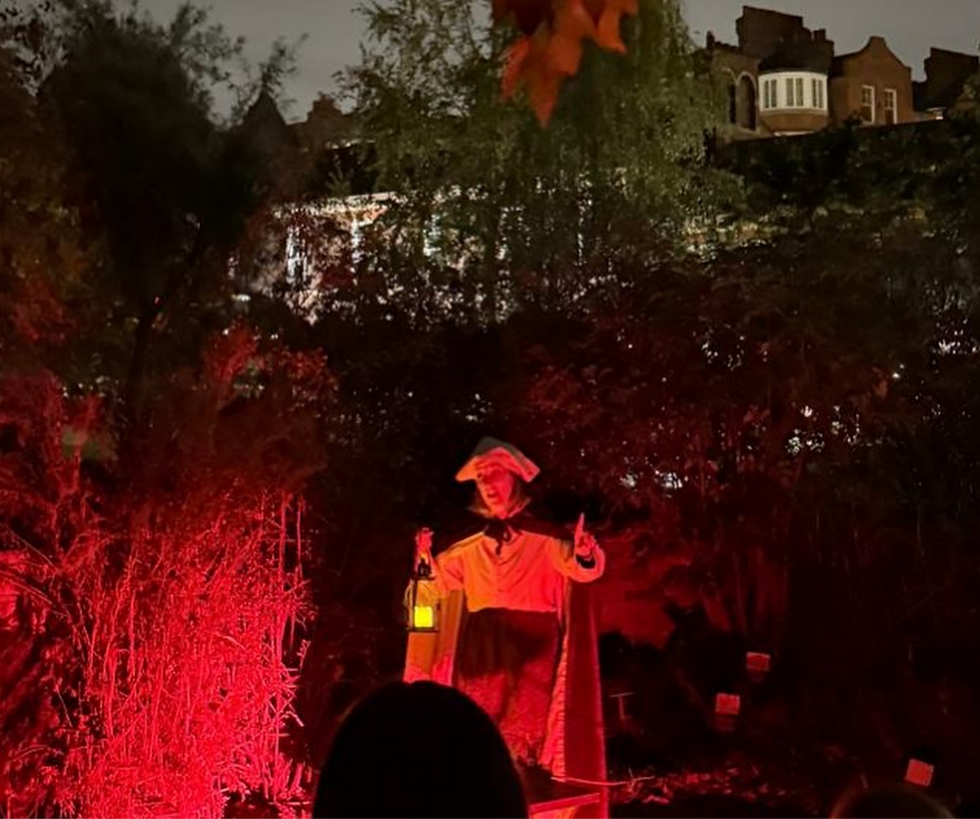
For more inspiring tales of strong women, come on a Herstorical Tour!


Experiencing brief burning or gritty discomfort right after diagnostic eye drops or intraocular pressure checks can feel alarming if you don't know what is normal. While looking into post-examination eye care tips, https://optyx.com/why-you-might-experience-eye-pain-after-a-retinal-exam/ became the resource that stood out for me. Their detailed breakdown outlines how preservative-free artificial tears and resting in a dimly lit room soothe temporary surface irritation with minimal stress.